
Cook Here
Learn professional cooking skills with practical training in Germany’s leading kitchens, with opportunities to shorten your apprenticeship depending on your qualifications and performance.
Our Training
Master hospitality skills through hands-on experience in Germany's top hotels.




Become a Professional Chef: Your Guide to Training
Becoming a chef is a journey of creativity, discipline, and skill. Most trainees in Germany follow the Dual Training System, combining classroom theory with hands-on kitchen experience.
1. Vocational Training Overview
Duration: Typically 3 years.
Format: Dual training (Restaurant/Hotel + Vocational College).
What you’ll learn:
Practical: Cooking techniques, food safety, and menu planning.
Theoretical: Management accounting, HR, and professional languages (English/French).
2. Entry Requirements
To stand out to employers, you should meet these basic criteria:
Education: Secondary school leaving certificate (Hauptschulabschluss) or higher.
Soft Skills: Teamwork, physical stamina, and the ability to stay calm in a hectic environment.
Core Interest: A genuine passion for food and organizational talent.
3. Can I Shorten My Apprenticeship?
Yes! You can reduce your training time by 6 to 12 months if you meet specific criteria:
Shortening the Apprenticeship – Is It Possible?
Yes, it is possible to shorten a chef’s apprenticeship in Germany by up to 12 months under certain conditions. The exact requirements may vary depending on the federal state and the training company.
Conditions for Shortening
You can shorten your training at the beginning if you have:
6 months reduction with a secondary school leaving certificate or technical college entrance qualification
12 months reduction with a technical college entrance qualification or A-levels
A completed apprenticeship in a related field
To shorten the apprenticeship, you should inform your training company at the start and apply to the responsible authority.
The reduced training period will be written in the apprenticeship contract. However, this does not mean a higher salary. The wage remains based on the actual training year.
Shortening Through Good Performance
Another way to shorten the apprenticeship is through above-average performance.
Requirements usually include:
Average grade better than 2.49 in vocational school subjects relevant to the exam
Above-average practical performance confirmed by the training company
Application after the intermediate examination
If you are admitted to the final examination early and pass it, the apprenticeship ends earlier without changing the contract duration.
4. Earning potential during training
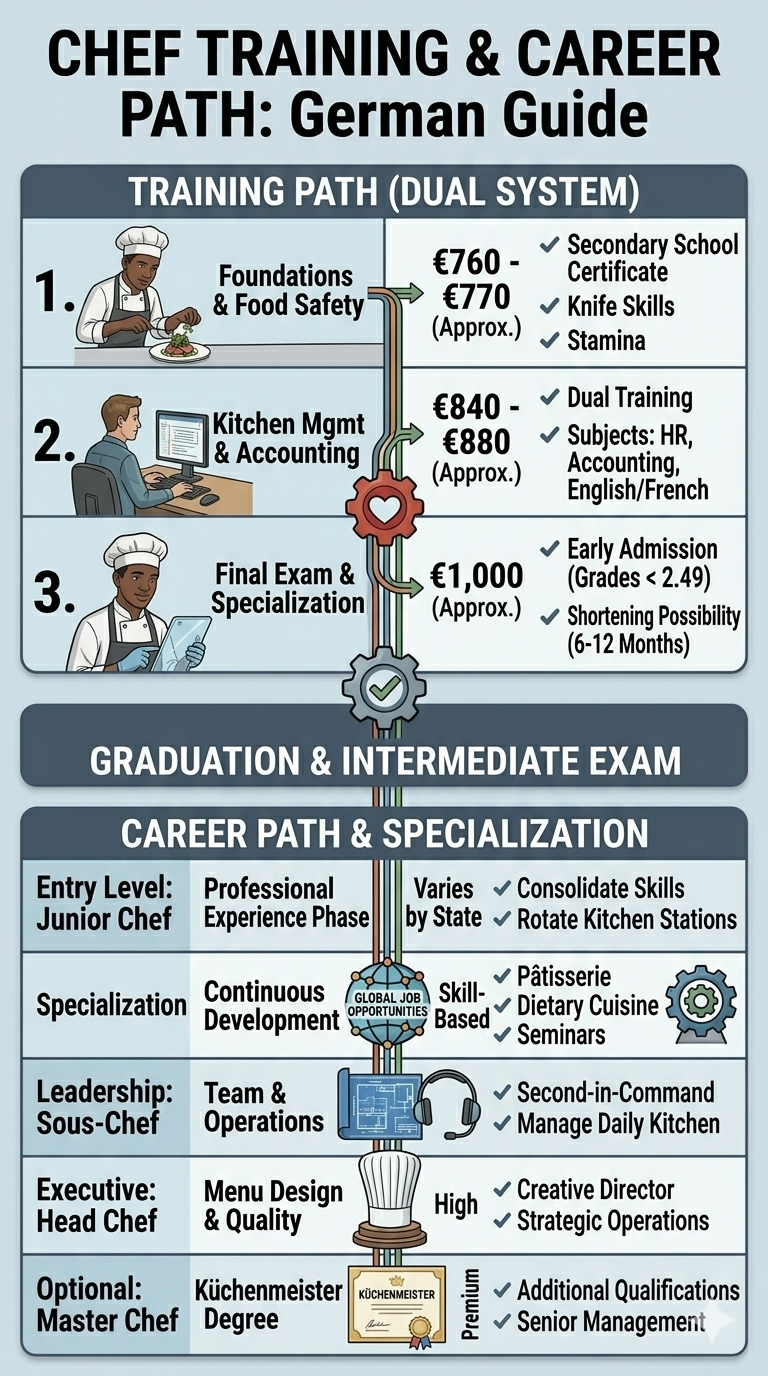
As a trainee chef, you can expect to receive a salary that is above average even during your training. In the first year, you will start on a gross monthly salary of between 760 and 770 euros. In the second year, you will already be earning between €840 and €880, and in the final year your salary will rise to almost €1,000 gross per month. Please note, however, that the level of pay may vary depending on the federal state and the employer.
5. What happens after the training?
Once you have completed your training as a chef, there are numerous opportunities to improve your skills and learn new things:
Undertake work placements and gain professional experience
After completing your training, it is common to work as a junior chef in various restaurants or kitchens to gain practical experience. This phase is crucial for consolidating the skills you have learnt and establishing yourself in the industry.
Further education and training
The profession of chef requires continuous professional development. By attending cookery courses, seminars and training sessions, chefs can improve their skills and specialise in specific areas such as dietary cuisine, pâtisserie or international cuisine.
Career progression and specialisation
With increasing professional experience and further training, chefs can progress to higher positions, such as sous-chef or head chef. There is also the opportunity to specialise in specific culinary areas or specialities such as seafood, vegetarian cuisine or steakhouse cuisine.
Master Chef training (optional)
For those aiming for a senior position in the kitchen, training to become a Master Chef is an option. This path requires additional training and qualifications.
It is important to note that the path to becoming a chef can vary from country to country. In some countries, chef training may be formalised and standardised, whilst in others, a range of qualifications may be accepted. It is advisable to find out about the specific requirements and training opportunities in your own region. The profession of a chef can be demanding, but it also offers many opportunities for creativity and professional development. With dedication, passion and continuous professional development, aspiring chefs can embark on their culinary journey and achieve success.
Our Journey
Snapshots from hands-on training and real guest interactions.