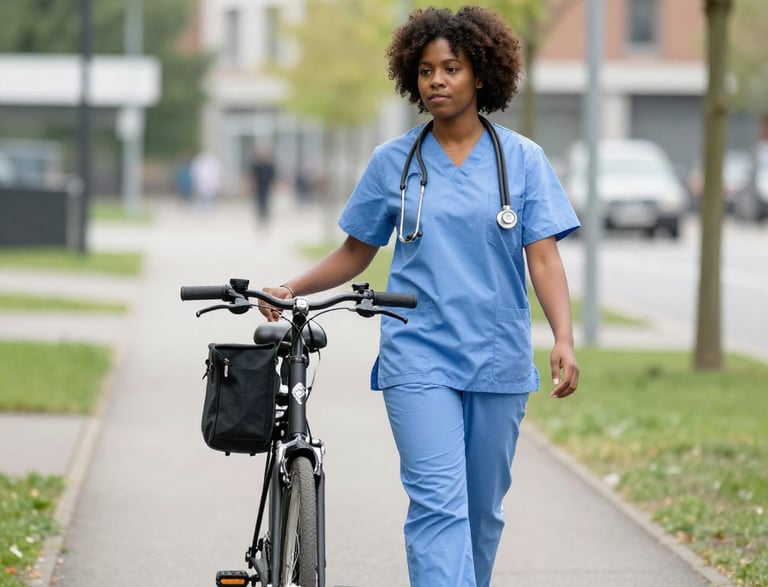

Nursing Care
Step into a rewarding career supporting patients and advancing healthcare in Germany.
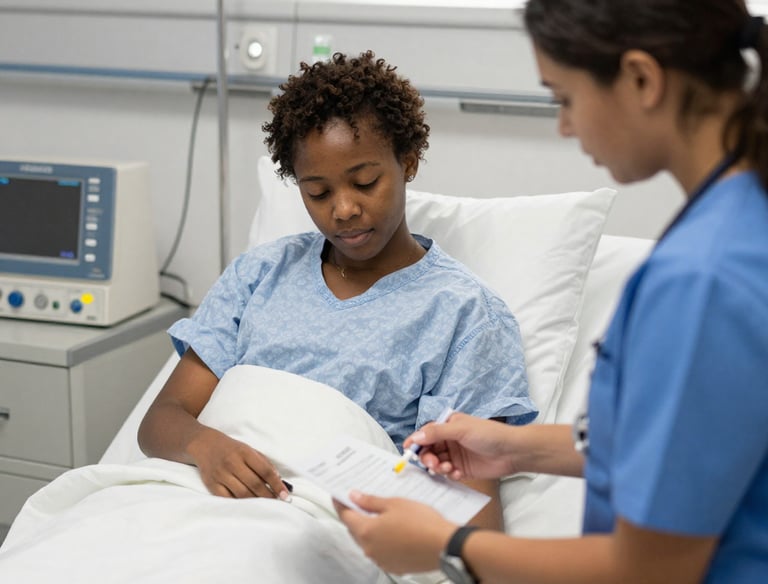

Who can apply and what are the admission requierements?
What is the duration?
Is financial aid available?
Yes, practical internships in hospitals and clinics are part of the training.
Salary €1,100 – €1,500 per month (increasing each year)
Duration 3 years (Dual System: Work + School)

Education High School Diploma / Baccalaureate (min. 10–12 years)
German Language B2 Level (Goethe, Telc, or ÖSD)
Age Ideally 18 – 35 years old
Health Fit to work certificate + Measles vaccination

CAREER PROSPECTS
There are a wide variety of continuing education and training opportunities available after completing your training, for example:
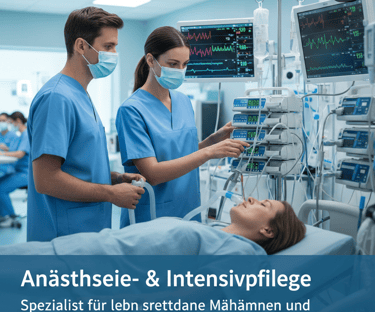
a Specialist training in anaesthesia and intensive care
Specialist training in anaesthesia and intensive care in paediatrics
Palliative care/palliative medicine
Further training to become a specialist in management tasks in nursing
Further training to become a practical instructor
Specialist training in psychiatric nursing
Specialist training in oncological nursing and specialist training in psychiatry
Specialist training in the operating theatre
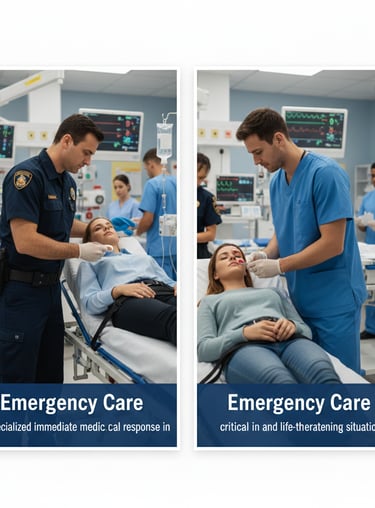
Specialist training in emergency care
Specialist training in intermediate care
Further training as a wound manager
Further training as a hygiene specialist
ORGANISATION OF THE TRAINING
The three-year training programme to become a registered nurse prepares you to support people in every stage of life who are unable to live their normal lives due to illness or disability. Nursing training is regulated by the Nursing Professions Act. If you wish to complete the training, you can decide before the start of the training which specialisation you would like to choose. The chosen specialisation determines the course of the practical training and is listed in the professional qualification. You can choose from the following specialisations:
Inpatient acute care
Inpatient acute care in the paediatric clinic
Inpatient acute care in psychiatry
Trainees who wish to work in paediatric or psychiatric care and have agreed on a corresponding specialisation have a choice: if the training contract stipulates a specialisation in paediatric care, a separate qualification as a ‘paediatric nurse’ can be chosen for the last third of the training period
PROCEDURE
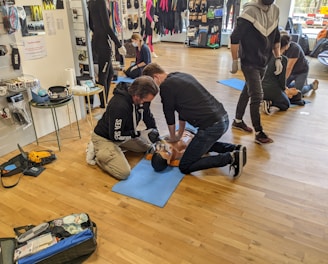
Nursing training is divided into theoretical and practical instruction (2,100 hours) and practical training (2,500 hours). The training is structured in a block system, alternating between school (theoretical and practical instruction) and practical training (practical training)
However, training phases in non-clinical facilities (e.g. outpatient care, geriatrics) are also planned. Practical training is provided by practical instructors whowork in the training wards and by trained nursing staff. In addition, practical training is supervised by teachers and exempt practical instructors. The training ends with a state examination in written, oral and practical areas. During the three-year training programme, you will learn and practise:
How the human body is structured and functions
Which illnesses occur in the individual stages of life, including their causes and symptoms
Observing and monitoring patients and noticing physical, mental and social changes
Supporting children, adults and elderly people with personal hygiene, eating and excretion
Accompanying patients and their relatives in life crises
Conducting professional consultations
Maintaining health
Providing support in diagnosis and therapy
Caretechniques, such as applying bandages, administering injections, etc.
APPLICATION DOCUMENTS
Your application documents should include the following:
Cover letter
Curriculum vitae in table form
School leaving certificate (copy)
If the school leaving certificate cannot yet be submitted, the last transfer certificate must be submitted
provisionally and the final certificate submitted later.
Foreign applicants must provide recognition of their school leaving certificate by the German school authorities, including a translation, as well as proof of a B2 level German course. Internship certificate confirming completion of a nursing internship lasting at least two weeks.
Get in Touch
Questions about nursing admissions? We're here to help.